Immunology & Immune Biomarkers| Open call for papers
➔ Computational and Machine Learning Approaches in Immunology
Go to quick submission instructions | Request additional information
About the Editor

Dr Stefano Cacciatore
Associate Editor for Immunology
Cancer Genomic Group
International Centre for Genetic Engineering and Biotechnology (ICGEB) | Cape Town, South Africa
ORCID | Scopus Author ID | Google Scholar ID | About the Editor
Journal information
Scimago - Journal & Country Rank | Journal rank 2024: 0.660
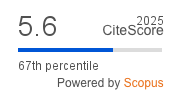
Scopus | 2024 (as of 5/1/25): 4.6
About this journal
Publisher information
AboutScience
Computational and Machine Learning Approaches in Immunology
Advances in computational methods and machine learning are reshaping the field of immunology, enabling researchers to decode the complexity of immune responses at unprecedented scale and precision. By leveraging large datasets—from single-cell sequencing to clinical records—computational approaches allow for predictive modeling, biomarker identification, and the discovery of novel therapeutic strategies. These tools hold promise for bridging basic immunology with translational applications, paving the way toward precision immunology and data-driven medicine.
Topics of interest include, but are not limited to:
- Algorithmic Innovation: Development of machine learning, deep learning, and AI-driven models tailored for immunological data.
- Immune System Modeling: Computational simulations of immune responses, host–pathogen interactions, and vaccine design.
- Big Data Integration: Approaches for analyzing and harmonizing large-scale datasets such as single-cell omics, imaging, and clinical data.
- Translational Applications: Predictive models for disease progression, therapeutic response, patient stratification, and immunotherapy optimization.
- Ethical and Practical Perspectives: Challenges in data sharing, reproducibility, interpretability, and the integration of computational tools into clinical workflow
By bridging disciplines, computational and machine learning approaches are reshaping how immune complexity is understood and are driving new advances in health research and clinical practice.